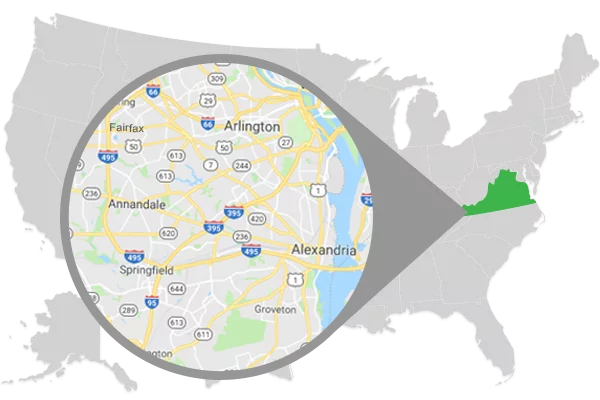




Are you wondering what animals have their mating season in March? Raccoons, squirrels, opossums, groundhogs, starlings, skunks, foxes, flying squirrels…in other words, pretty much all of them. Northern Virginia has a wide variety of wildlife, and each species behaves a little differently during mating season. We’ll tell you how to know if they’ve made your home their next nesting spot, and how to keep them out for good. If you suspect an animal is in your attic, call Summit Wildlife Removal at 703-884-2124 or complete our contact form to schedule a professional inspection.

Raccoons
Raccoon breeding season runs from January to March, and they typically have their babies in April or May. During this time, mother raccoons search for a safe place to raise their young. In the wild, they often choose hollow trees or dense brush. Unfortunately, your attic also provides many of the same benefits. They’re dark, quiet, and safe from the elements.
Raccoons also have excellent memories. So if a spot worked for them in the past, you can bet they’ll be back to do it again. Once inside an attic, they can cause significant damage by contaminating the space, tearing up insulation, and creating more entry points.
If you hear scratching and thumping noises coming from your ceiling, there’s a chance a raccoon has made a den in your attic. Because raccoon babies must be treated with care, removal should always be handled humanely by a professional wildlife removal expert.

Squirrels
Squirrels have two mating seasons each year. One in the winter from December to February, and another in late spring and summer from May to August. Female squirrels typically give birth to up to four babies in early spring or late summer. Squirrel nests are usually easy to spot. Built out of leaves and twigs, they sit high up in trees and look similar to large bird nests. Sometimes they even have a second nest for storing food or hiding from predators.
But squirrels don’t just stay outside. They commonly enter attics through small gaps in the soffit, fascia, roofline joints, or vents in the roof. Despite their small size, they can cause a huge amount of damage. Chewed wires and damaged insulation are just a couple of the problems they can cause inside your attic. A professional wildlife removal company will trap the squirrels, remove them from the property, and build exclusions to ensure they won’t be returning to your home.

Opossums
Opossums are the only marsupials native to Northern Virginia and much of the eastern United States. Their breeding season begins as early as December, and may continue through October. Most of their young are typically born between February and June. After only 11-13 days, the mother opossum gives birth to around eight or nine tiny infants. The newborns stay in the mother’s pouch for about two months. Once they’re out, the mother will carry them around on her back until they’re ready to survive on their own.
Opossums are generally not dangerous for humans, so if you see one in your yard, it will most likely keep moving and leave you alone. They usually only become a nuisance if they decide to den under your home, deck, or shed. A wildlife removal expert can install exclusions underneath the house to make sure that opossums can’t return and damage the property.

Groundhogs
Groundhogs, woodchucks, marmots, whatever you call them, are very active in March in Virginia. They’re emerging from hibernation and ready to bulk up after losing 30% of their body fat in the winter months. Early to mid-March is when they start their primary mating season, and typically give birth to their babies in April and May. By late summer, the young groundhogs are ready to be on their own and establish dens of their own.
Like most wildlife, groundhogs are harmless to humans, but can be a threat to your property. They burrow in the ground up to five feet deep, which can weaken the ground above their large dens. Crops, the foundation of buildings, farm equipment, and even livestock can all be at risk of damage if a groundhog has burrowed underneath them. Wildlife control specialists are trained to humanely catch and remove them from your property, and build exclusions so they aren’t able to return.

Starlings
Brought over from Europe by a Shakespeare fanatic, the European Starling is an exotic species found throughout the United States. Their breeding season lasts the first half of the year, from January through June, and their bills turn bright yellow and their feathers turn into a purplish-green iridescent color. Although a murmuration (the name for a large group of starlings) can be quite a spectacle, they can be quite disruptive to wildlife and destructive to infrastructure. They build their nests in barns, buildings and window shutters.
Starling control can be a bit tricky and requires a lot of effort. Sealing the gaps can keep them outside of buildings, but deterring them from just nesting on the ledges of buildings can be a challenge. Wildlife removal experts typically install spikes on so the birds can’t land, or cover the ledges in metal or plastic so the birds will slide right off. Another approach that can have some success is repeatedly scaring the birds off with loud noises or bright lights, but that method may take repeated efforts before it’s successful.

Skunks
Skunks’ reputation precedes them. They’re found all throughout Virginia in a variety of different habitats. From January to around mid-March, they tend to be more active and travel miles outside of their usual territories in hopes of finding a mate. They might be outside of their comfort zone during this time, so they may be more inclined to spray if they feel threatened. Female skunks have a gestation period of about 60-75 days, after which they look for a safe place to raise their kits. Make sure you’re checking under your porch, crawlspace, and deck for their dens.
If you do run into a skunk in your yard, keep your distance and pay attention to their warning signs (stomping the ground, raising their tail, hissing). Not only are they known to spray, but in Virginia, they are one of the primary carriers of rabies. That’s why it’s essential to contact wildlife removal professionals to have them safely and humanely removed from your property.

Foxes
Fox mating season runs from December through February, and the kits are born in early spring. During courting, they can be heard making ear-piercing shrieks and screams, which can be quite terrifying if you’re unfamiliar with their mating rituals. The male fox (dog) and the female fox (vixen) will typically hunt together for a short period of time before mating and forming a monogamous pair. The vixen looks for a safe place to den and raise the cubs, who are born blind, while the dog fox hunts for food.
Sometimes foxes will build a den on your property. If you notice a 6-12 inch hole under your deck and suspect it’s a fox den, it’s best to leave it alone. Foxes are typically shy and like to avoid contact with humans. After about a month or so, they will naturally move on to a new location. Attempting to trap or relocate the foxes can be quite dangerous for both you and the animals. Besides, they are quite clever, so they won’t be tricked by a trap if it’s been improperly set.
If they are actively stalking pets, causing damage to your porch, shed, deck, or are in your crawl space, then you should contact a humane wildlife removal company to help alleviate the problem. Fox exclusions are the most effective way to humanely remove foxes from your property.

Flying Squirrels
The southern flying squirrel is commonly found throughout Virginia, particularly in the western part of the state in wooded areas. They typically build their nests high in trees, but they forage for food at the ground level. Their gliding membrane allows them to travel up to 28 meters. Similar to the grey squirrels, southern flying squirrels have 2 litters a year. One during February through March, and another in May through July. After around 8 weeks of care, the baby squirrels are able to take care of themselves. However, it’s not uncommon for the young to stay with the mother until the next breeding season begins.
Southern flying squirrels will infest homes just like the grey squirrels. They chew through siding, wood, and plastic to sneak into small entry points into attics, walls, and crawlspaces. Once they’re in, they cause significant damage and leave a mess. If you hear scratching or chirping sounds or notice chew marks and droppings, it’s time to contact a wildlife removal company to have them humanely removed from your property and install exclusions so they aren’t able to return.
Why Wildlife Activity Increases in Early Spring
Warmer weather and longer days draw tons of wildlife out from hiding and hibernation. They forage for food whether that’s new vegetation starting to grow in the spring, or because their prey is starting to come out of hiding as well. After they find their mates, they need to find a safe place to raise them, and oftentimes, that’s inside your attic or on your property. Professional wildlife removal services are the best way to handle the situation humanely, restore and repair any damage caused by wildlife, and build exclusions to prevent it from happening to you again.

When to Call a Wildlife Professional
It’s always a good idea to call a wildlife removal expert when dealing with animals inside your home. When baby animals are involved, handling them incorrectly can even be illegal in some situations. If you’re in Fredericksburg, Fairfax, Arlington, Alexandria, or the Northern Virginia area, reach out to Summit Wildlife Removal at 703-884-2124 or complete our contact form for humane removal and relocation services.